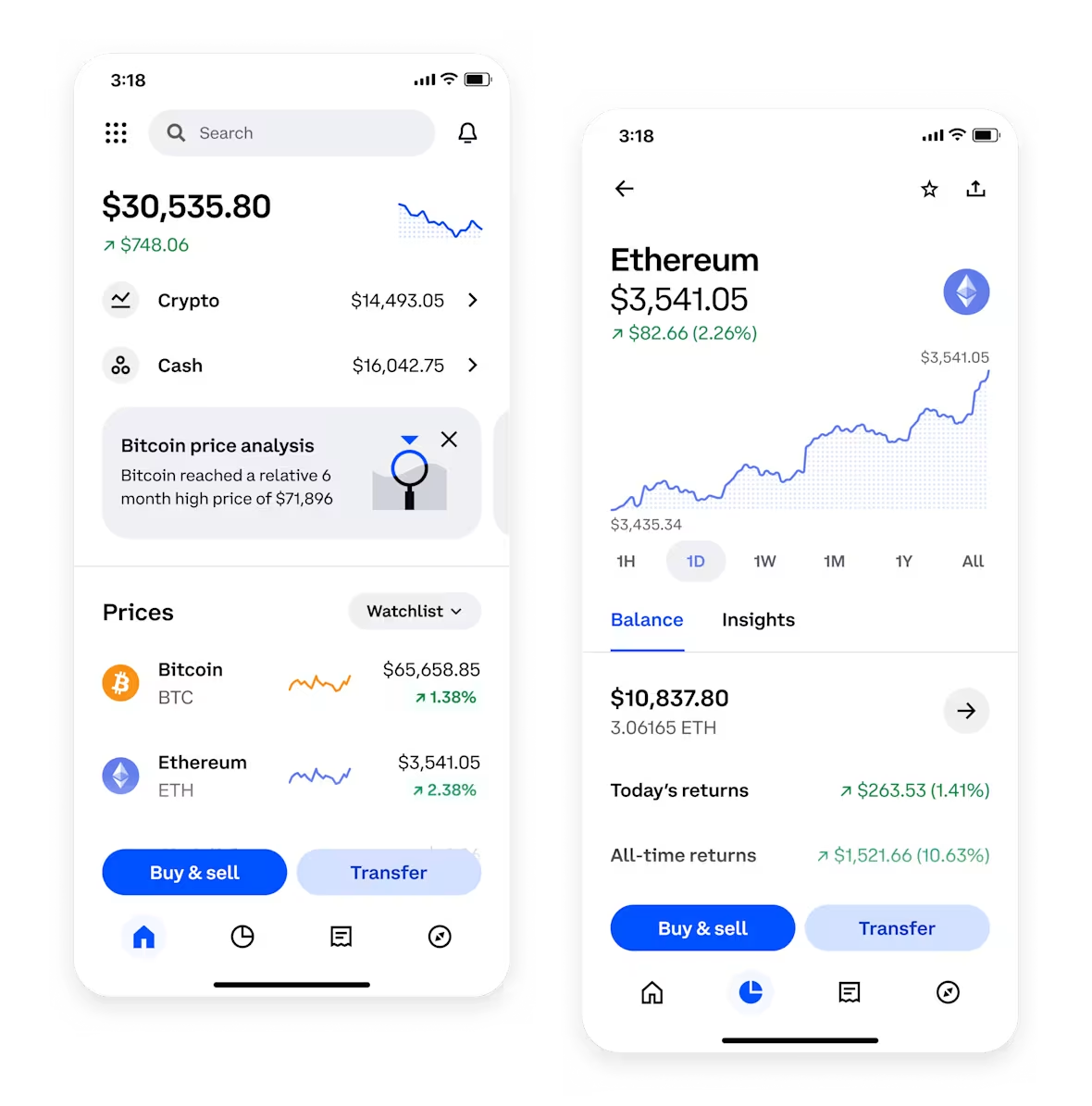

Binance, one of the world's largest cryptocurrency exchanges, offers a powerful feature known as the Binance Cross-Chain Exchange. This tool allows users to trade digital assets across different blockchain networks, such as swapping Bitcoin for Ethereum-based tokens or moving assets between the Binance Smart Chain and other blockchains. Understanding how to use this feature can greatly enhance your trading flexibility and reduce transaction fees. This guide provides a clear, step-by-step breakdown of the process.
First, it is important to understand what cross-chain exchange means. In simple terms, it is the ability to trade one cryptocurrency for another without needing to withdraw funds to an external wallet or use a third-party swapping service. Binance accomplishes this through its internal system, which supports multiple blockchains like BNB Chain, Ethereum, Solana, Polygon, and many others. The core mechanism involves depositing assets into your Binance wallet in a specific network format (e.g., BEP-20 on Binance Smart Chain, ERC-20 on Ethereum) and then trading them directly on the exchange.
To begin, you must have a verified Binance account and sufficient funds deposited. Log in and navigate to the "Wallet" section. Click on "Fiat and Spot" to view your asset balances. If you currently hold a cryptocurrency, such as USDT, on one chain (e.g., Ethereum's ERC-20 network), and you want to trade it for an asset that is native to another chain (like AVAX on the Avalanche C-Chain), you need to use the "Deposit" function carefully. For cross-chain exchange, you often start by depositing funds on a specific network. For example, if you already have USDT on Ethereum, you can use the "Withdraw" function to send it to your own Binance address on a different network, but this is not the direct exchange method. The simplest cross-chain exchange method on Binance is using the "Convert" tool.
Go to the "Trade" menu and select "Convert." Here, you can select the cryptocurrency you want to sell (e.g., BNB on the BNB Beacon Chain). Then, select the cryptocurrency you want to buy (e.g., MATIC on the Polygon network). The Convert tool automatically handles the cross-chain trading process internally. You will see a summary of the exchange rate and the estimated amount you will receive. Click "Preview Conversion" and then confirm. The trade is executed almost instantly, and the new asset appears in your Binance wallet on the correct network.
Another method for advanced users is the "Classic" trading interface. On the "Trade" page, select "Classic." Here, you can trade specific trading pairs that inherently involve different chains. For instance, a trading pair like "BTC/BUSD" trades Bitcoin against Binance's stablecoin. However, for true cross-chain conversion where the output asset is on a different blockchain than the input, the Convert tool is more direct. If you attempt a classic trade, you would first need to manually swap your asset on one chain to a different one using the "Withdraw" function, selecting the correct network of your receiving address, which adds extra steps and potential errors.
A crucial step to avoid losing funds is network selection. When depositing or withdrawing assets from Binance, always double-check the "Network" dropdown menu. If you send USDT using the Solana network to a wallet address that is configured for Ethereum, the funds may become lost or require complex recovery. Binance displays a clear warning message when selecting networks that do not match your address. Therefore, always ensure that the network of the sending and receiving wallets are identical.
Practical tips for using Binance cross-chain exchange include checking for minimum transaction amounts and network fees. Some networks, like BNB Chain, have very low fees, while Ethereum's gas fees can be high during peak times. Also, note that the "Convert" tool offers a fixed rate for a short period, so you should confirm quickly to avoid slippage. For large trades, the "Classic" order book might offer better prices, but it requires more manual steps. Lastly, always use Binance's official website or app to avoid phishing scams.
In summary, using the Binance cross-chain exchange is a straightforward process once you understand the role of network types. For beginners, the "Convert" tool is the safest and easiest way to swap assets across blockchains. For more experienced users, the withdrawal and deposit method, combined with careful network selection, offers more control. Always double-check your network selections and be aware of the associated fees. By following this guide, you can confidently trade across multiple blockchains directly from your Binance account.