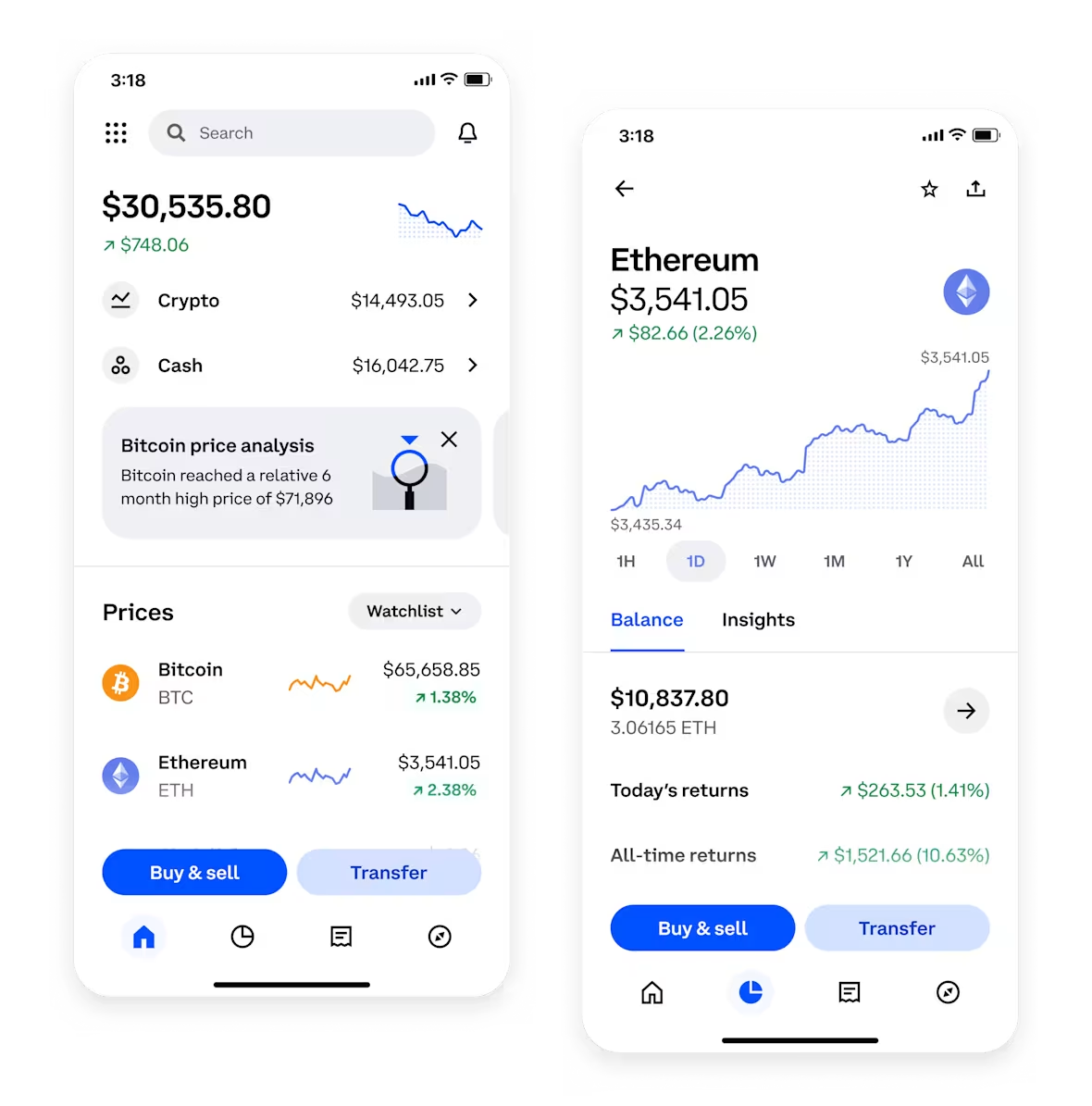

Binance spot trading remains one of the most accessible yet powerful tools for cryptocurrency investors worldwide. Unlike derivatives or margin trading, spot trading involves buying and selling digital assets at current market prices for immediate settlement. This fundamental approach appeals to both beginners seeking straightforward exposure and experienced traders executing precise market timing strategies. Understanding how to navigate Binance's spot market effectively can significantly impact your portfolio's growth trajectory.
The core advantage of Binance spot trading lies in its simplicity and full asset ownership. When you purchase Bitcoin or Ethereum on the spot market, the coins are transferred directly to your wallet. This eliminates the complexities of liquidation risks, funding rates, or contract expirations associated with futures trading. For long-term holders, spot trading provides a clean way to accumulate positions gradually through dollar-cost averaging or lump-sum investments. Additionally, Binance offers over 300 spot trading pairs, from major coins like BTC/USDT to emerging altcoin pairs, giving you diverse exposure across market segments.
To succeed in Binance spot trading, mastering order types is essential. The platform supports market orders for instant execution at current prices, limit orders for buying below or selling above market value, and stop-limit orders for automated entries or exits. Smart traders often use limit orders to capture favorable prices during market volatility. Another effective technique involves combining spot trading with Binance's Simple Earn products—buying dips on spot and then transferring those assets to flexible savings accounts to generate passive income while holding. This hybrid approach maximizes both trading opportunities and idle asset utilization.
Risk management in spot trading often gets overlooked but is critical for capital preservation. Unlike margin trading, spot positions cannot be liquidated below zero, but significant price drawdowns can still lock capital for extended periods. Implementing a clear strategy—such as allocating no more than 5% of your portfolio to a single altcoin trade or using trailing stop orders—helps mitigate downside risk. Binance also provides real-time order book depth charts and candlestick patterns directly on the trading interface, enabling technical analysis without switching platforms. Many traders combine these tools with relative strength index (RSI) or moving average convergence divergence (MACD) indicators to identify entry and exit points with higher probability.
For those new to Binance spot trading, starting with a small test position is advisable. The platform offers a simulation mode (testnet) where you can practice without real funds, though the live market experience is irreplaceable. One common pitfall is chasing hype tokens immediately after listing—these often experience sharp initial pumps followed by corrections. Instead, focus on established pairs with high liquidity and tight spreads, such as BTC, ETH, BNB, or SOL against USDT. Monitoring the "depth" of the order book visually can also reveal support and resistance levels that matter to professional traders.
Regulatory considerations also influence Binance spot trading strategies. Users in different jurisdictions may face varying withdrawal limits or KYC requirements. Keeping your account verified and understanding local tax obligations for spot trades is non-negotiable. Binance provides downloadable trade history reports to simplify tax calculations. As the cryptocurrency market matures, spot trading remains the foundation for most investment theses—whether you're hedging inflation exposure with Bitcoin or diversifying into DeFi tokens through BNB pairs. Start with a clear plan, use the tools Binance offers, and let spot trading serve as your gateway to broader crypto market participation.